Shiva And Dionysus Pdf Merge
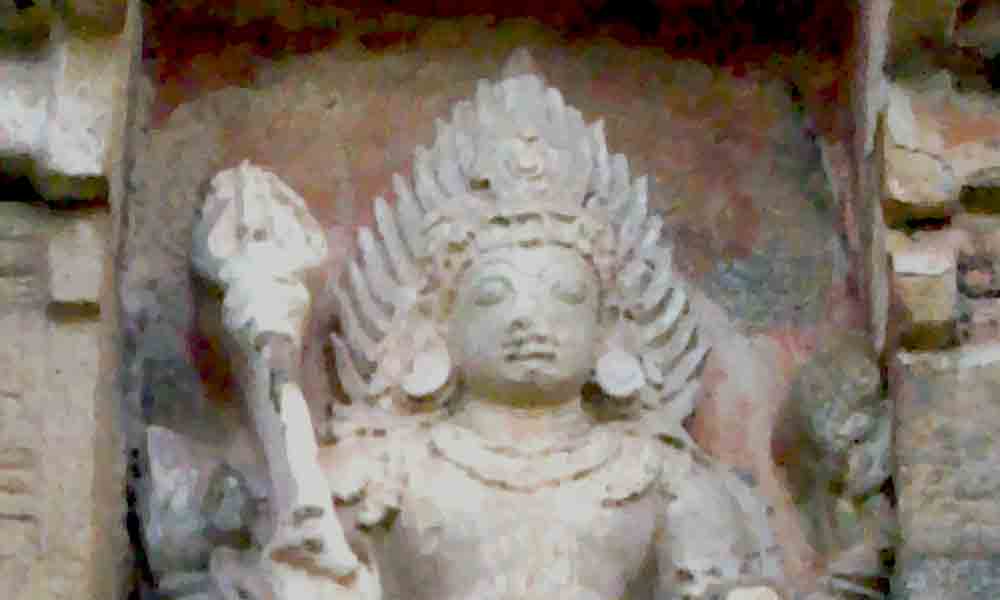
My studies of the Puranas,Ithihasas,Ramayana, Mahabharata,Astronomical Events mentioned in them, Archeology,Sanskrit and Tamil literature had pointed out to, not ony the Myth of Aryan Invasion Theory,The Dravida-Aryan Divide, but also led me to the fact that Lord Shiva, with His son Ganesha left South India through the Middle east,Europe, Africa, Americas,before settling down in the Arctic where the Rig Veda was composed. All because of a Tsunami. At that time Satyavrata Manu also left for Ayodhya to found the Ikshvaku Dynasty, to which Lord Rama belongs. The archeological finds throughout the world, od Shiva and His Symbols, confirm my theory.
Shiva And Dionysus Pdf Viewer. Shiva is portrayed in Hindu legends as the ideal ascetic withdrawn in his. These images that combine the masculine and.
The Shiva family returned to India through Russia, Kazakhstan, and Persia. The Greek connection of Shiva. Hercules is believed to be either Balram or Lord Krishna.-quoted by Megasthenes Lord Shiva seated in Yoga Posture Please read my post on this. And the Pillars of Hercules are a tribute to Lord Krishna. Akkian, Flavius Arrianus, the Grecio-Roman Biographer with Alexander, the Great, in His Book, it is also called as Indica like Megasthenes’s, describes the voyage of Alexander to India. He chronicles the customs and manners of the people of India. Abode Mount Olympus Symbol Thyrsus, grapevine, leopard skin, panther, cheetah Consort Ariadne Parents Zeus and Semele Siblings Ares, Athena, Apollo, Artemis, Aphrodite, Hebe, Hermes, Heracles, Helen of Troy, Hephaestus, Perseus, Minos, the Muses, the Graces Roman equivalent Bacchus, Liber “Dionysos Louvre Ma87 n2” by © Marie-Lan Nguyen / Wikimedia Commons.
Licensed under Public Domain via Wikimedia Commons – “he Nysaeans are not an Indian race, but descended from the men who came into India with Dionysus–perhaps from those Greeks who were rendered unfit for service in the wars which Dionysus waged with the Indians. Perhaps also he settled with the Greeks those of the natives who were willing to join his colony. Dionysus named the city itself Nysa, and the land Nysaea, in honour of his nurse Nysa. The mountain near the city, at whose base Nysa was built, is called Meros (thigh) after the misfortune he experienced as soon as he was born. This is the story framed by the poets in regard to Dionysus, and let the writers of legends Grecian and foreign expound it. Among the Assacenians is Massaca, a large city, where also is the stronghold of the land of Assacia; and there is also another large city, Peucelaitis, not far from the Indus. These tribes have been settled west of the Indus as far as the Cophen.
Of the expedition of Dionysus, indeed, the city of Nysa is no mean monument, as also are the mountain Meros, the ivy which grows on this mountain, the Indians themselves also marching into battle to the sound of drums and cymbals, wearing speckled garments like the bacchanals of Dionysus. But of Heracles there are not many memorials. For the statement that Alexander forcibly subdued the rock of Aornus, because Heracles was not able to capture it, seems to me a piece of Macedonian boasting; just as they called the Parapamisus Caucasus, though it has no connection with it. And having observed a certain cave in the land of the Parapamisadians, they said that it was the famous cave of Prometheus, the son of the Titan, in which he was hung for the theft of the fire.
And besides, in the land of the Sibians, an Indian race, because they saw the inhabitants clothed in skins, they said that the Sibians were those who had been left behind from the expedition of Heracles. The Sibians also carry cudgels, and the figure of a club was branded upon their oxen; this too they explained to be a commemoration of the club of Heracles. If anyone gives credit to these tales, this must have been another Heracles, neither the Theban, nor the Tyrian, nor the Egyptian; but some great king of a land situated in the interior not far from India. He says that in ancient times the Indians were nomads, like that section of the Scythians who are not agriculturists, but wandering about on waggons, live at one time in one part of Scythia and at another time in another part, neither inhabiting cities nor consecrating temples to the gods. So the Indians had no cities or temples built for the gods. They clothed themselves in the skins of the wild beasts which they killed, and ate the inner bark of certain trees, which are called tala in the Indian language, and, as upon the tops of palm-trees, there grow upon them things like clews of wool.
They also fed upon the flesh of the wild beasts which they caught, eating it raw, until Dionysus came into their country. But when Dionysus came and conquered them, he founded cities and made laws for them, and gave the Indians wine as he had given it to the Greeks. He also gave them seeds and taught them how to sow them in the earth; so that either Triptolemus did not come to this part when he was sent by Demeter to sow corn through the whole earth, or this Dionysus came to India before Triptolemus and gave to the inhabitants the seeds of cultivated crops.
Dionysus first taught them to yoke oxen to the plough, and made most of them become husbandmen instead of being nomads, and armed them with martial weapons. He also taught them to worship the gods, and especially himself with the beating of drums and the clashing of cymbals.
Dionysus Facts And Information
He taught the Indians the Satyr-dance which among the Greeks is called the cordax, and to let their hair grow long in honour of the god. He also showed them how to wear the turban, and taught them how to anoint themselves with unguents. Wherefore even to the time of Alexander the Indians still advanced into battle with the sound of cymbals and drums. When Dionysus had arranged these affairs and was about to leave India, he appointed as king of the land Spatembas, one of his companions, the man most versed in the mysteries of Bacchus. When this man died his son Boudyas succeeded to his kingdom.
The father reigned fifty-two years, and the son twenty years. Cradeuas, the son of Boudyas, succeeded to the throne.

From this time for the most part the kingdom passed in regular succession from father to son. If at any time direct heirs were wanting, then the Indians appointed kings according to merit.
The Heracles, who according to the current report came to India is said, among the Indians themselves, to have sprung from the earth. This Heracles is especially worshipped by the Sourasenians, an Indian nation, in whose land are two great cities, Methora and Cleisobora, and through it flows the navigable river Jobares. Megasthenes says, as the Indians themselves assert, that this Heracles wore a similar dress to that of the Theban Heracles.
Very many male children, but only one daughter were born to him in India, for he married many women. The daughter’s name was Pandaea, and the land where she was born, and over which Heracles placed her as ruler, was named Pandaea after her.
From her father she received 500 elephants, 4,000 cavalry, and 130,000 infantry. Certain of the Indians tell the following story about Heracles, that when he had passed over every land and sea and had rid them of every evil beast, he found in the sea a woman’s ornament, such as up to the present day those who bring wares from India to us still buy with zeal and carry away. In former times the Greeks and now the Romans who are fortunate and wealthy with still greater zeal buy what is called in the Indian tongue the marine pearl. The ornament seemed so fine to Heracles that he collected pearls like this from all the sea and brought them to India to be an adornment for his daughter. Megasthenes says that the mussel of it is caught in nets, and that many of them live in the sea at the same place, like bees, and that the pearl-mussels have a king or queen as bees have. Whoever has the good fortune to capture the king, easily throws the net around the rest of the swarm of pearlmussels, but if the king escapes the fishermen, the others are no longer to be caught by them.
The men allow the flesh of those which are caught to rot, but they use the shell for ornament; for among the Indians the pearl is worth thrice its weight in refined gold. This metal is also dug up in India. Pandea referred to here is the daughter of Lord Krishna/Balrama. Please check my post on this. It is probable that Shiva had traveled through Greece before reaching the Arctic and returned to India.
This is what Arrian is referring to repeatedly as Dionysus having invaded India. And note the symbols, clothes. ” was under the impression that Dionysus was the Greek precursor of Krishna. But, deeper analysis of character and life events of Dionysus shows that he was the Greek format of Hindu God Shiva. Now, let us consider some of the characters of Dionysus. Generally he is known as the wine God, similarly Shiva is a kind of vagabond with drinking habits.
Consider the strange animals that pulls the cart of Dionysus and strange creatures that follow him. They look similar to “shiva Ganas”, who come all kind of shapes and animal shapes.

(These animal figures –themselves may be indicating various constellations —with animal motifs)’ Citation. Related articles. It is the policy for my website to respond to any notice of alleged copyright infringement. Wherever external information is used, Link and Citation has been provided: and if there is any omission, it is unintentional. If brought to the notice of Ramani’s blog, it shall be rectified.
THIS BLOG/WEBSITE claims no credit for any images posted on this site unless otherwise noted. Images on this blog are copyright to their owners. If there is an image appearing on this blog that belongs to you and you do not wish for it appear on this site, please E-mail with a link to said image and it will be promptly removed.” If you are the rightful owner of the material used by and you believe that your intellectual property rights has been infringed, I request you to send any and a proper notification.
I will remove your content within 24 hours. I apologize for any kind of misuse of your material in my website. Fair Use Notice. This site contains copyrighted material the use of which has not always been specifically authorized by the copyright owner. I make such material available in an effort to advance awareness and understanding of issues relating to Hinduism civil rights, religious tolerance, economics, individual rights, international affairs, liberty, science & technology, I believe this constitutes a ‘fair use’ of any such copyrighted material as provided for in section 107 of the US Copyright Law. In accordance with Title 17 U.S.C.
Section 107, the material on this site is distributed without profit to those who have expressed a prior interest in receiving the included information for research and educational purposes. Copy Right and Disclaimer.
SIVA AND DIONYSOS-VISIONS OF TERROR AND BLISS BY J. BRUCE LONG Haverford, Pa., U.S.A. It will be our purpose in this essay to describe and interpret certain 'divine modalities' or 'modes of manifestation' which two deities possess in common-Rudra-Siva in India and Dionysos in ancient Greece. It is our belief that the character of these gods whose worship sprang out of and was nurtured by cultures which are widely divergent in time and place, form homologous or parallel structures of religious experience and expression.
It will be our contention that these two divine modanities manifest certain religious significances which are at once historical and transhistorical, traits which are both Greek and Indian, on the one hand, and fundamentally human, on the other. We feel that by providing such a phenomenological and structural analysis of their personalities, deeds and cults as manifested in their respective mythologies, we shall augment, not diminish the religious significance of each. The precise reasons and causes for this parallelism are profound and complex. Like any other formative and long-lived religious tradition, the roots of these two cults, the socio-religious causes of their appear- ance, and the laws governing their development elude the grasp of the scholar. We might suggest, however, that such a parallelism arises, in part, from the fact that the cults of both gods developed in similar fashions at the earliest stages, that they sprang up among peoples having attained approximately the same type of cultural and social level, and that, reflecting as they do certain religious truths which their devotees cherished, they represent similar or homologous apprehensions of Divine and human reality.
We freely admit that the use of the method of structural compara- tivism or comparative phenomenology in interpreting religious data (where no signs of cross-cultural influence are forthcoming) will inevitably lead to a certain distortion of the material. 181 nevertheless, that such an approach, if used advisedly and with due caution, will elucidate certain religious meanings in the material which otherwise would not come to light. GENERAL REMARKS CONCERNING SIVA AND DIONYSOS The Vedic god Rudra of whom '8iva' (Auspicious One) was used in the beginning either as an euphemistic epithet or a laudatory invocation of his more benevolent side, appears in the Rig Veda as a slightly exaggerated form of Varuna.
Varuna, the god of law and order in both the cosmic and human realms, inspired in his devotees both dread and delivery from the dreadful, both fear and redemption from the fearful. Rudra, by contrast, inspires, for the most part, only fear and in a most curious manner, a paradoxical fascination for the terrible. He is, in the famous nomenclature of Rudolf Otto, the numinous par excellence, the mysterium trentetidum who provokes feelings of tremen- dum as well as f ascinosum. As god of the tempest, he is father and leader of the Maruts or Rudras, gods of the stonn-winds who are as destructive as they are creative. Rudra, a name interpreted by the great Vedic com- mentators, Yaska 1 ) and Sayana as meaning 'the Howler', is closely associated with the Vedic raingod Indra and with the highly venerated god of fire, Agni.
2) In connection with all manner of meteorological phenomena, Rudra is the awful and terrifying god of the tempest who crackles and howls in the wake of the monsoon rains. He is the Divine Archer 3) (Sarva, RV I.I Ia.IO; 2.33.14) who sends his shafts (Sarva) 1) Nirukta 10.8: 'Rudra is (so-called) because he bellows (rauti) or because he runs about (dravati) vociferating (intens. Of Vru) or is derived from the causal of rud, to roar.' Yana's list of six native etymologies for Rudra on RV I.114.1 in John Muir's Original Sanskrit Text on the Origin and History of the People of India, their religions and institutions (5 vols.; London: Trubner & Co., 1868-74) IV, 301.
2) For a complete presentation of the theories concerning the etymology of the name 'Rudra', see Jan Gonda, Vedisme et Hindousme Ancien, Vol. I of Les Religions de L'Inde. Paris: Payot, 1962, pp. 3) Sarva is a new name assigned to Rudra in V.S.
The AV refers to Sarva with destructive lightning four times. This Rudra-Sarva of Vedic religion is markedly reminiscent of a deity who appears in the Zend-Avesta as 'Saurva' who occupied the Indo-European 'third function' in providing moisture and fecundity in both plants and animals according to the tripartite system of George Dumezil. On the basis of the fact that both Rudra-Sarva and his Indo- Iranian predecessor both carry the same weapon (.